

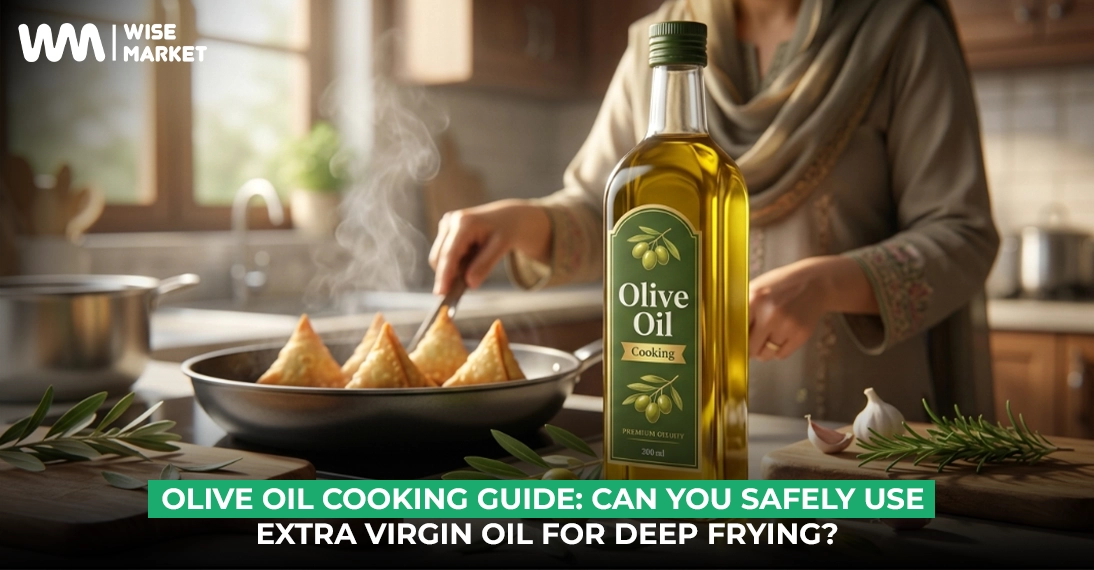

You just spent five thousand Rupees on a premium bottle of extra virgin olive oil, and now your aunt is telling you it turns into poison the moment it touches a hot frying pan. It is a terrifying claim that makes most people in Pakistan hide their expensive oil in the back of the cupboard, reserved only for salads.
Actually, that toxic oil myth is one of the biggest misunderstandings in our kitchens today. You might be surprised to learn that Mediterranean chefs have been frying with this stuff for centuries without any issues. The idea that it suddenly becomes dangerous is simply not backed by science.
Finding real quality in the food and grocery sector is getting harder, so you need to know how to use what you buy. This post clears up the confusion so you can cook for your family with total peace of mind. Let us look at why your karahi might be perfectly safe for a splash of the good stuff.
Is it Actually Safe to Deep Fry with Extra Virgin Olive Oil?
The short answer is a definite yes, but you have to keep an eye on your stove settings. Extra virgin olive oil is remarkably stable because it is packed with natural antioxidants that act as a shield. These compounds prevent the oil from breaking down into harmful substances when the heat goes up.
Many people in Karachi and Lahore are shifting toward this oil because they want to improve their heart health. While it is safer than most refined seed oils, the price remains the biggest hurdle for a standard household. It is a brilliant choice for your health, provided you do not let the oil sit on the hob for too long.
We notice a lot of our customers looking for better options in the food and grocery aisle to avoid processed fats. They want the best for their children but feel nervous about changing their traditional cooking methods. Our mission is to give you the facts so you can manage your kitchen like a professional.
What is the Smoke Point of Extra Virgin Olive Oil?
The smoke point is just a fancy way of saying the temperature at which the oil starts to burn and lose its flavour. For high-quality extra virgin olive oil, this usually happens between 190 and 215 degrees Celsius. This range is actually much higher than most people realize.
Most deep frying for samosas or rolls happens around 170 to 180 degrees Celsius. This means you have a comfortable safety gap before the oil starts to degrade or smoke. As long as you are not leaving the pan unattended on high flame, your oil stays perfectly stable.
| The oil type | When it starts smoking | What it does best |
| Extra Virgin Olive Oil | 190 to 215°C (High) | Sautéing, light frying, and dressings. |
| Canola/Rapeseed Oil | 200 to 230°C (Very High) | Baking and heavy deep frying. |
| Desi Ghee | 250°C (Extreme) | Searing meat and traditional tarka. |
| Pomace Olive Oil | 230 to 240°C (Very High) | Large batches of deep fried snacks. |
Does Heating Olive Oil Destroy its Health Benefits?
You might worry that the high heat will kill off the expensive nutrients that make olive oil famous. While some of the delicate aromas might fade, the majority of the heart-healthy fats stay completely intact. It remains a far superior choice compared to the highly refined vegetable oils found in local shops.
The Protective Crust Effect
Actually, olive oil forms a protective layer on the surface of your food very quickly. This prevents the oil from soaking into your pakoras, making them much lighter and less greasy. It is a fantastic way to enjoy the crunch you love without that heavy, bloated feeling after a meal.
The Change in Flavour
Wait, there is more: the taste of the oil actually becomes milder when you heat it. If you find the grassy or peppery bite of raw oil too strong, frying with it might be your new favourite method. It allows the spices in your meat or vegetables to shine through without being overpowered.
How can you fry successfully with Olive Oil?
To get the most value from your food and grocery budget, you need to follow a few simple kitchen rules. First, never wait until the oil is billowing smoke before you drop your food in. This is a sign that the oil is already starting to break down and will taste bitter.
- Use a thermometer: Try to keep the temperature around 175 degrees for a perfect result.
- Fry in small batches: Putting too much in at once drops the heat and makes food soggy.
- Filter your oil: You can reuse olive oil two or three times if you strain out the burnt bits.
- Keep it dark: Store your bottle in a cool cupboard to prevent light from ruining the fats.
This approach ensures that your fried treats come out crispy on the outside and tender on the inside. Small habits like these help you save money while keeping your family on a healthy path. It is all about being smart with the premium ingredients you bring into your home.
Which Type of Olive Oil is Best for Deep Frying?
If you find extra virgin oil too expensive for a big batch of fries, Pomace olive oil is your best friend. This version is extracted from the remaining olive pulp and has an even higher smoke point. It is the secret weapon of many high-end restaurants that want health benefits without the massive bill.
Pomace oil handles the intense heat of a Pakistani kitchen exceptionally well and has a very neutral taste. It is a great middle ground for families who want to move away from vanaspati or soy oils. You still get a much better fat profile for your heart without doubling your monthly grocery expenses.
We believe that your wellness starts with what you put in your frying pan every single day. That is why we work hard to bring you products and advice that support a longer, more energetic life. We want you to feel confident using the best technology and ingredients 2026 has to offer.
Why Should You Trust us at Wise Market Pakistan for your Essentials?
We know that the Pakistani digital market is full of uncertainty and sellers who do not stand by their word. That is why we have built our platform on a foundation of absolute transparency and premium quality. We only stock items that have been verified by our experts because we value the trust you place in us.
Our 14-day money-back guarantee is our way of telling you that we stand behind every single product we sell. We also offer free nationwide delivery, so you can get your tech and lifestyle upgrades. We are your partners in building a more stylish, efficient, and healthy lifestyle.
Our team performs a rigorous quality check on every item before it ever reaches our digital shelves. We want you to feel the same excitement unboxing your kitchen essentials as you do with a fresh flagship smartphone. Visit wisemarket.com.pk today and let us help you find the best tech and lifestyle products to power your home.
Frequently Asked Questions
Can I mix olive oil with regular vegetable oil?
Actually, it is not a great idea because different oils have different burning points. The vegetable oil might start to break down earlier, which can ruin the taste of the entire batch. Stick to one type of oil at a time for a consistent and safe cooking experience.
How do I know if my olive oil is genuine?
Pure olive oil should get thick and cloudy if you put it in the fridge for 24 hours. If it stays perfectly clear and liquid, it is likely mixed with cheap seed oils. Always check your food and grocery supplies for this simple test to ensure you are getting what you paid for.
Is olive oil better than sunflower oil for my heart?
Yes, olive oil is much richer in monounsaturated fats, which help lower bad cholesterol levels. Sunflower oil is high in polyunsaturated fats, which can cause inflammation if you eat too much of it. Making the switch is a small change that leads to massive health wins over time.
Choosing the right cooking fat is a smart move for your family’s future and your own daily energy. Your kitchen deserves the best nutrients 2026 has to offer to stay healthy and modern. Keep reading our blogs to stay updated on the latest tech and lifestyle trends in Pakistan.