


Buying furniture isn’t just about choosing something that looks good today, it’s about choosing something that still looks good years from now.
If you live in Pakistan, you’ve probably noticed how the weather can affect household items. During the monsoon season, humidity levels rise noticeably. In cities like Karachi, the coastal climate keeps moisture in the air for much of the year, while Lahore, Islamabad, and other regions also experience humid spells that can impact furniture over time. A table that felt sturdy when you bought it may begin to swell, cabinet doors may stop closing properly, or laminated surfaces may start lifting at the edges.
In many cases, the problem isn’t the craftsmanship, it’s the material.
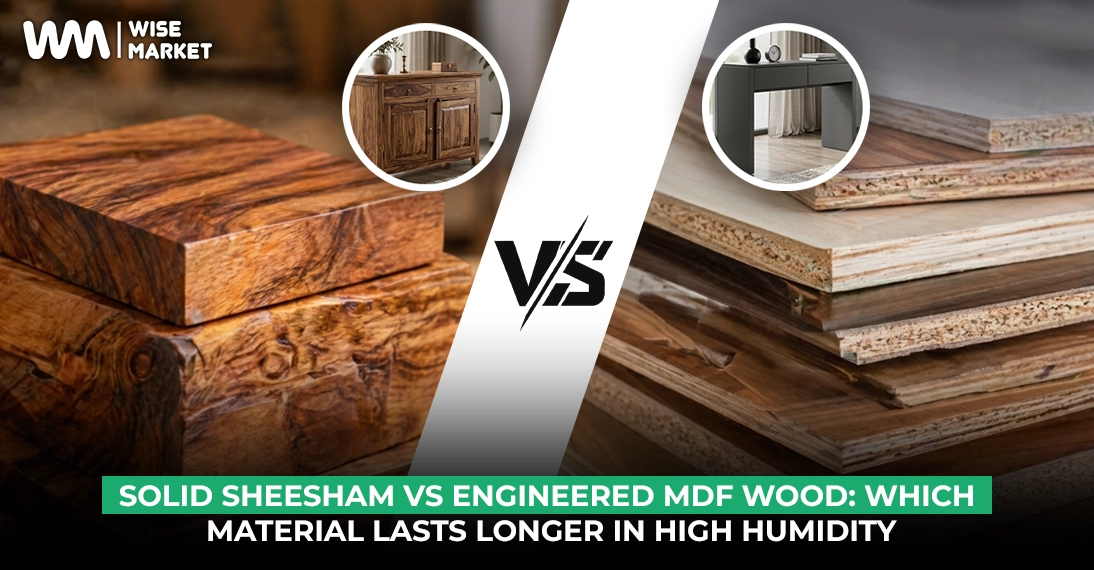
Two of the most common furniture materials you’ll come across are engineered MDF wood and solid Sheesham wood. Both have their strengths, but they behave very differently when exposed to moisture. Understanding those differences can help you avoid expensive replacements and choose furniture that suits your home, your budget, and your local climate.
In this guide, we’ll compare engineered MDF and solid Sheesham in real-world conditions, focusing on:
- How humidity affects each material
- Which one lasts longer
- Maintenance requirements
- Cost versus long-term value
- Which material is better for different types of home furniture
Whether you’re furnishing a new apartment or simply replacing an old console table, making an informed decision now can save you money and frustration later.
Which Material Lasts Longer in High Humidity?
If you’re looking for the short answer, solid Sheesham generally lasts longer than standard engineered MDF in humid environments. As a dense hardwood, Sheesham is naturally stronger, more durable, and better equipped to handle changing humidity levels when it’s properly finished and maintained.
That doesn’t mean MDF is a poor choice.
High-quality engineered MDF can perform well indoors when it’s protected from standing water and excessive moisture. It’s also more affordable, offers a smooth contemporary finish, and works particularly well for decorative furniture, storage solutions, and modern interiors.
Here’s a quick comparison.
| Feature | Engineered MDF | Solid Sheesham |
| Moisture Resistance | Moderate (better if moisture-resistant MDF is used) | High when properly sealed |
| Average Lifespan | 8–15 years with proper care | 20–40+ years with maintenance |
| Resistance to Warping | Moderate | High |
| Repairability | Limited | Excellent |
| Maintenance | Low to Moderate | Moderate |
| Cost | Budget-friendly | Premium |
| Best For | Modern furniture, organizers, console tables, decorative pieces | Long-term investment furniture and heirloom-quality pieces |
Bottom line: If durability in humid conditions is your top priority, solid Sheesham has the edge. If you’re looking for stylish, practical furniture at a more accessible price point, engineered MDF remains a smart option, especially when used in well-ventilated indoor spaces and cared for properly.
Looking for modern home furniture that blends style with practicality? Explore Wise Market’s Home Furniture collection for contemporary console tables, storage organisers, and decorative pieces designed to complement everyday living without compromising on aesthetics.
What Is Engineered MDF Wood?
Many people hear the term “engineered wood” and assume it’s low quality. In reality, engineered wood is a broad category, and Medium-Density Fibreboard (MDF) is one of its most widely used materials.
MDF is made by breaking down hardwood and softwood fibres into very fine strands. These fibres are mixed with resin and wax, then compressed under high heat and pressure to create dense, smooth boards. The result is a material with a uniform structure that doesn’t contain natural knots, grain patterns, or inconsistencies commonly found in solid wood.
Because of this consistency, MDF has become a popular choice for contemporary furniture and home decor.
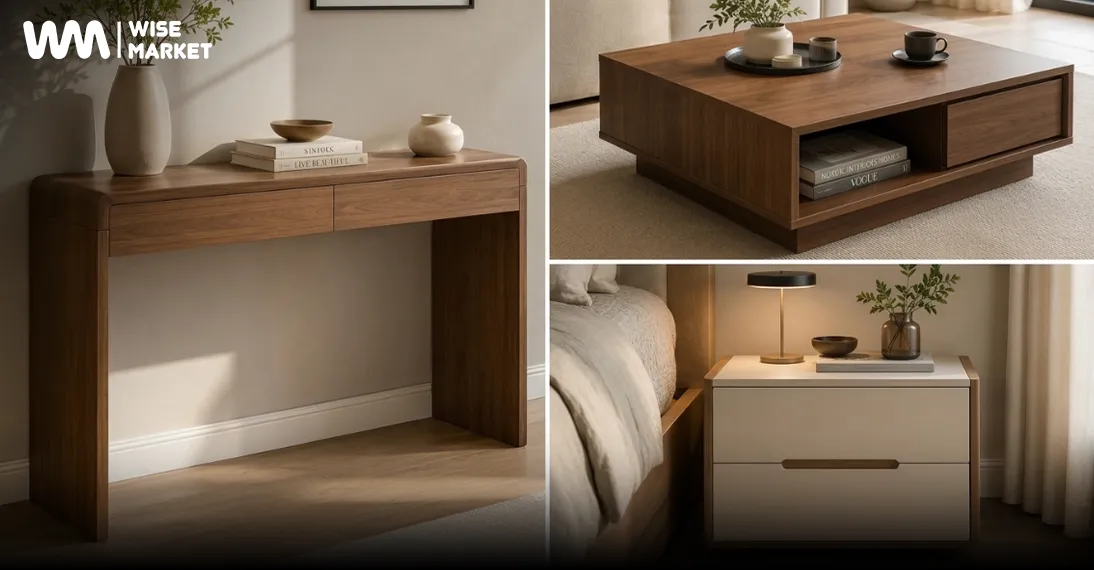
You’ll often find it in:
- Console tables
- Side tables
- Storage cabinets
- Decorative shelving
- TV units
- Dressing tables
- Wall-mounted furniture
- Interior decorative panels
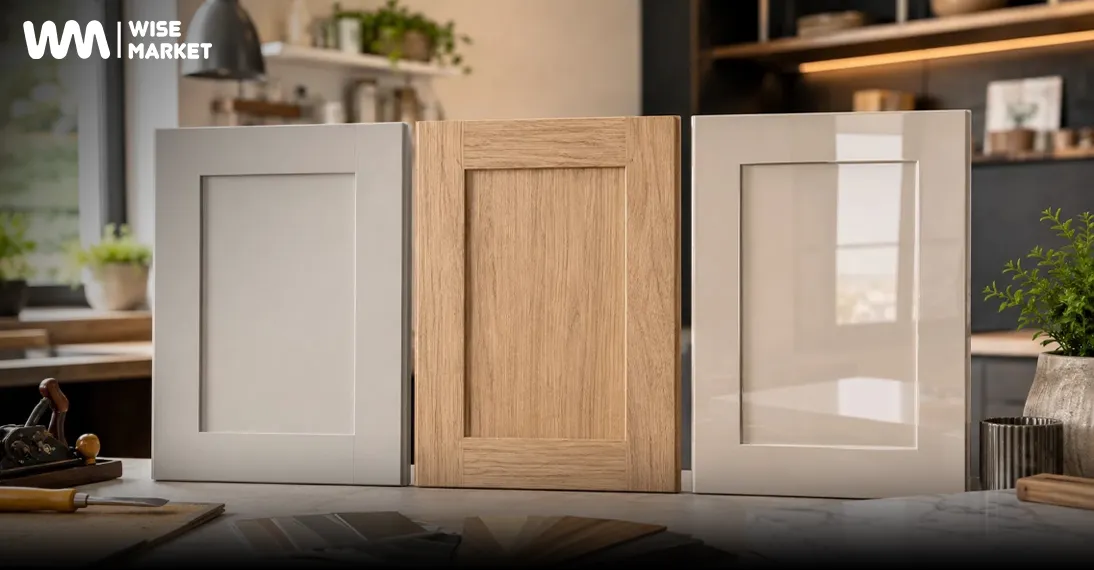
Its smooth surface also makes it ideal for painted finishes, laminated textures, and modern minimalist designs.
Why Homeowners Choose MDF
One of MDF’s biggest advantages is affordability. It allows manufacturers to create stylish furniture at a lower cost than solid hardwood, making it a practical option for first homes, apartments, rental properties, and anyone furnishing a space on a budget.
Beyond price, MDF offers several practical benefits.
Consistent Finish
Unlike natural wood, MDF doesn’t have knots or uneven grain. This creates clean lines and smooth surfaces that work particularly well with modern interiors.
Design Flexibility
Because it’s easy to machine, MDF can be cut into decorative shapes and contemporary profiles that would be more expensive to produce in hardwood.
Excellent for Painted Furniture
If you prefer matte white, black, walnut, or coloured furniture, MDF provides a very smooth base for paint and laminates, resulting in a refined finish.
Stable Indoors
In dry, climate-controlled spaces, quality MDF performs reliably for many years with minimal maintenance.
This is one reason you’ll often see engineered wood used for console tables, storage organisers, and decorative home furniture, pieces that prioritize clean aesthetics, efficient use of space, and affordability.
Where MDF Has Limitations
Despite its advantages, MDF isn’t indestructible.
Its biggest weakness is prolonged exposure to moisture.
If water penetrates the protective surface, the compressed wood fibres can absorb moisture and expand.
It’s important to note that everyday indoor humidity is very different from direct water exposure. A well-finished MDF console table in a living room can last for years, while an unprotected MDF cabinet placed in a persistently damp area may deteriorate much sooner.
The key isn’t simply choosing MDF, it’s choosing quality furniture, placing it in the right environment, and following basic care practices.
What Makes Solid Sheesham Different?
If MDF represents modern engineered furniture, Sheesham represents tradition, craftsmanship, and long-term durability. Also known as Indian Rosewood, Sheesham is a hardwood valued for its dense structure, distinctive grain patterns, and natural strength. For generations, it has been used to craft furniture designed to withstand daily use and last for decades.
One of the first things you’ll notice about Sheesham is that no two pieces look exactly alike. The natural grain gives each item its own character, making solid wood furniture feel unique rather than mass-produced. But its appeal goes far beyond appearance.
Naturally Strong and Durable
Because Sheesham is a hardwood, it resists dents and everyday wear better than many engineered materials. Tables, cabinets, and other frequently used pieces made from Sheesham can remain structurally sound for decades with proper care.
Better Long-Term Repairability
Unlike MDF, which can be difficult to restore after significant water damage or swelling, solid Sheesham can often be sanded, refinished, or repaired if its surface becomes scratched or worn. This ability to restore the material extends its usable life and contributes to its long-term value.
Performs Better in Changing Conditions
Wood naturally responds to changes in temperature and humidity, but dense hardwoods like Sheesham generally handle these fluctuations more gracefully than standard MDF. With a quality protective finish and routine maintenance, Sheesham is less likely to suffer the irreversible swelling that can affect engineered boards exposed to excessive moisture.
That said, no furniture material is completely immune to humidity. Even solid wood benefits from stable indoor conditions, good ventilation, and regular care to preserve its appearance over time.
How High Humidity Affects Furniture Materials
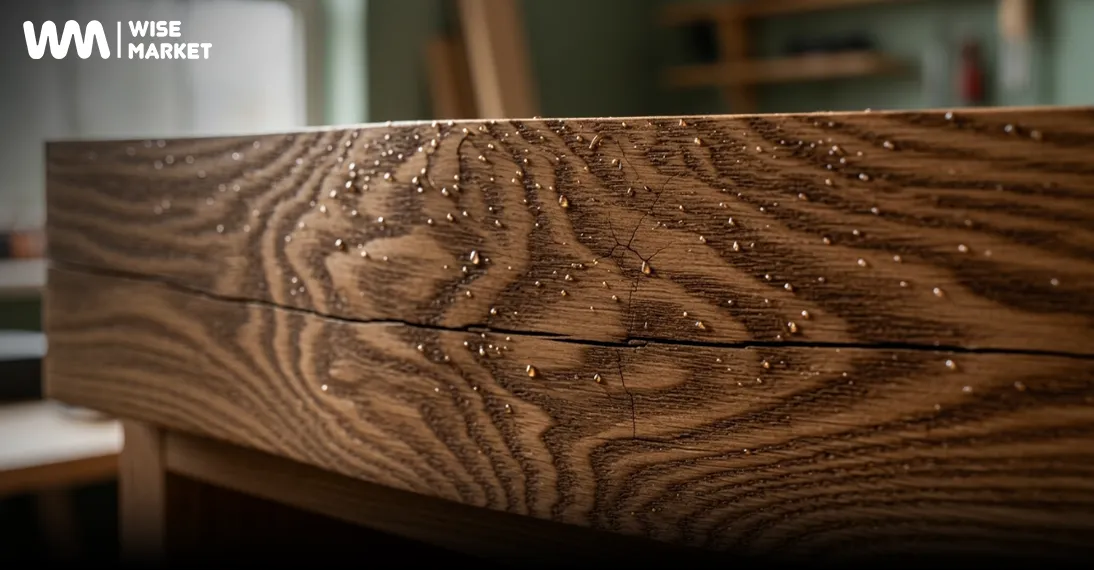
Before deciding between engineered MDF and solid Sheesham, it’s important to understand why humidity affects furniture in the first place. Many people assume furniture only gets damaged when water spills on it. In reality, moisture in the air can slowly affect certain materials, even if they never come into direct contact with water.
Wood and wood-based materials naturally absorb and release moisture as the surrounding humidity changes. This expansion and contraction happen gradually, but over time they can alter a piece of furniture’s shape, strength, and finish. The impact depends on the material.
What Happens During High Humidity?
When humidity levels rise:
- Wood fibres absorb moisture from the air.
- Materials expand slightly.
- Joints experience additional stress.
- Finishes may lose their adhesion.
- Trapped moisture can encourage mold or mildew in poorly ventilated areas.
This doesn’t mean your furniture will be ruined after one rainy season. Damage usually develops over months or years when furniture is consistently exposed to damp conditions or poor airflow.
Common Signs of Moisture Damage
Regardless of the material, watch for these warning signs:
- Drawers becoming difficult to open or close
- Cabinet doors no longer aligning properly
- Swollen edges
- Peeling laminate
- Bubbling on surfaces
- Small cracks in finishes
- A musty smell around furniture
- Mould growth in hidden corners
Catching these signs early can prevent more serious damage.
How Does MDF React to Humidity?
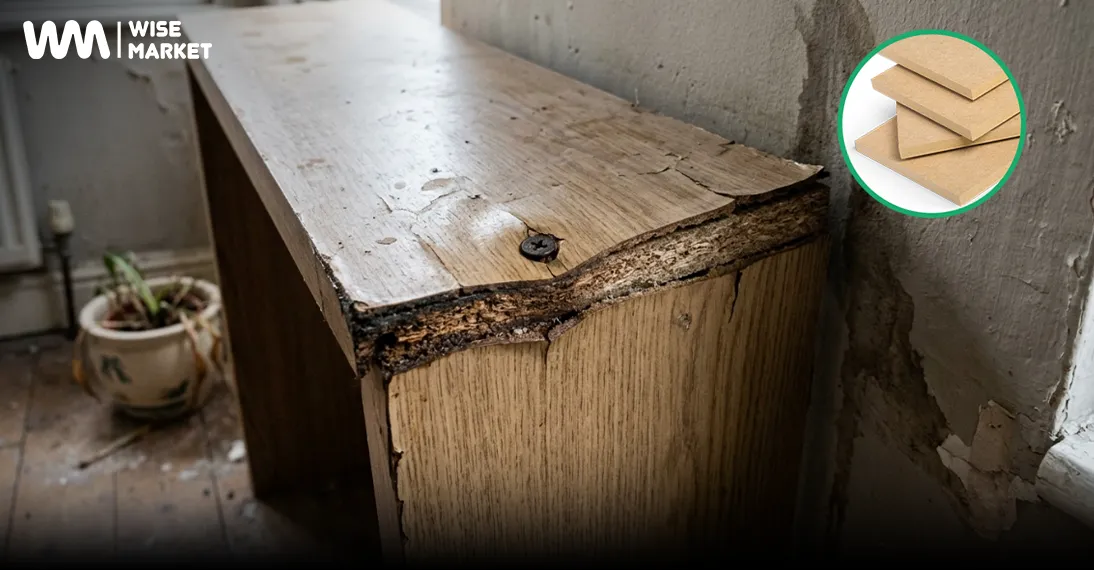
Engineered MDF performs well in normal indoor environments, but it has one weakness: its wood fibres are compressed together using resin. If moisture penetrates the protective outer layer, those fibres can begin absorbing water. Unlike solid wood, MDF doesn’t simply expand and return to its original shape. Excess moisture may permanently alter its structure.
This is why you’ll often notice swelling around:
- Bottom edges
- Corners
- Screw holes
- Cut sections
- Damaged laminate
Once swelling occurs, repairing MDF is difficult because the fibres have already expanded. However, it’s important to separate high humidity from poor furniture care. A quality MDF console table placed in a dry living room with good ventilation is very different from one placed against a damp wall or in an area where water regularly collects.
How to Help MDF Last Longer
Engineered MDF can remain in excellent condition for many years if you:
- Wipe spills immediately.
- Keep furniture away from leaking windows.
- Avoid placing it directly against damp walls.
- Ensure rooms have good airflow.
- Use furniture in appropriate indoor spaces.
- Choose products fibres, hardwoods like Sheesham expand and contract more gradually. Their dense structure helps them maintain strength even as environmental with quality laminated or sealed finishes.
For many homeowners, these simple habits are enough to significantly extend the life of MDF furniture.
How Does Solid Sheesham React to Humidity?
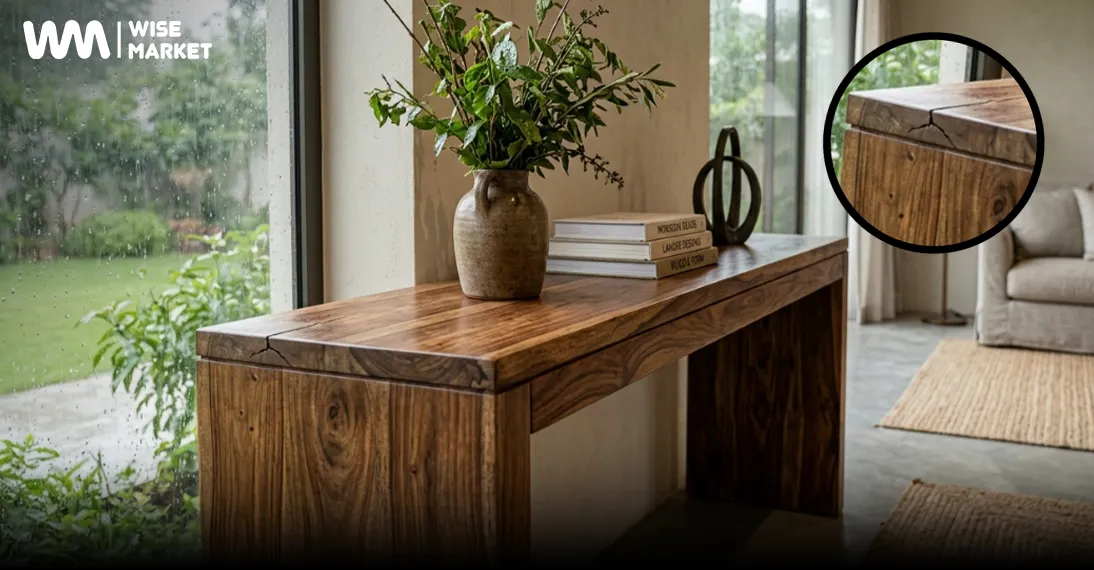
Solid Sheesham also reacts to moisture because it’s a natural wood. The difference is how it reacts. Instead of rapidly absorbing moisture into compressed fibres, hardwoods like Sheesham expand and contract more gradually. Their dense structure helps them maintain strength even as environmental conditions change.
When properly seasoned and finished, Sheesham generally handles seasonal humidity better than standard MDF. That doesn’t mean it’s maintenance-free.
If neglected, solid wood may experience:
- Minor expansion
- Hairline cracks from repeated moisture fluctuations
- Finish wear
- Surface dullness
Fortunately, these issues are often repairable.
Unlike MDF, which usually requires replacing damaged sections, solid wood furniture can often be:
- Sanded
- Refinished
- Polished
- Repaired by skilled craftsmen
This ability to restore rather than replace is one of the biggest reasons many homeowners consider Sheesham a long-term investment.
Engineered MDF vs. Solid Sheesham: A Detailed Comparison
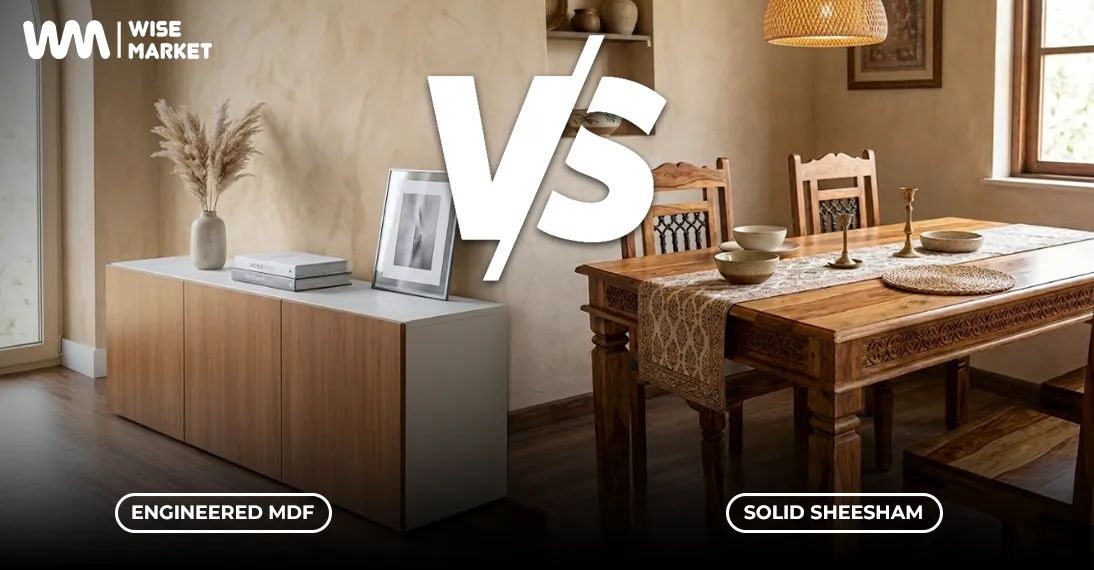
Choosing between MDF and Sheesham isn’t simply a matter of asking, “Which one is better?”
A better question is:
Which material is better for the way you live?
Let’s compare them across the factors that matter most when buying furniture.
1. Durability
If durability is your highest priority, solid Sheesham has a clear advantage.
Its dense hardwood structure is naturally built to withstand years of daily use. Dining tables, cabinets, and other frequently used furniture made from Sheesham often remain functional for decades when properly maintained.
Engineered MDF is durable for everyday household use but isn’t designed to match the lifespan of premium hardwood.
Winner: Solid Sheesham
2. Resistance to Humidity
This is the biggest reason people compare these materials.
Sheesham naturally performs better because of its hardwood density and ability to tolerate changing environmental conditions.
Standard MDF can perform well indoors, but prolonged exposure to moisture increases the risk of swelling if the protective finish is compromised.
If your home experiences persistent humidity or poor ventilation, Sheesham generally provides a greater margin of safety.
Winner: Solid Sheesham
3. Appearance
This category depends entirely on personal taste.
Choose Sheesham if you love:
- Natural wood grain
- Traditional furniture
- Warm textures
- Timeless interior seating costs more upfront but can prove economical over decades because of an attractive balance of affordability, functionality, and contemporary design. When used in suitable indoor environments and cared for properly,
- Unique patterns
Choose MDF if you prefer:
- Clean lines
- Matte finishes
- Modern colours
- Minimalist interiors
- Contemporary furniture
Neither material is objectively more attractive, they simply suit different design styles.
Winner: Tie
4. Maintenance
One of MDF’s biggest strengths is that it requires very little routine maintenance.
Simply dusting regularly and cleaning with a slightly damp cloth is usually enough.
Solid Sheesham, on the other hand, benefits from occasional polishing or conditioning to preserve its finish and natural beauty.
Although it requires a little more attention, that maintenance also contributes to its longer lifespan.
Winner: MDF
5. Repairability
Accidents happen.
Tables get scratched.
Corners chip.
Furniture gets moved.
The difference lies in what happens afterward.
A scratched Sheesham table can often be sanded and refinished.
Swollen MDF usually cannot.
This makes solid wood much easier to restore after years of use.
Winner: Solid Sheesham
6. Cost
Budget is often the deciding factor.
Engineered MDF offers excellent value for homeowners looking to furnish a home without overspending.
It allows you to achieve modern aesthetics at a significantly lower cost than premium hardwood.
Solid Sheesham costs more upfront but can prove economical over decades because of its longevity and repairability.
Think of it this way:
- MDF is often the better choice for affordability today.
- Sheesham may offer better value over the long term.
Winner: Depends on your priorities.
7. Weight
Sheesham is considerably heavier than MDF.
While that contributes to its sturdiness, it also makes furniture harder to move.
If you frequently rearrange rooms or move homes, lighter furniture may be more practical.
Engineered MDF is generally easier to transport and reposition.
Winner: MDF
8. Sustainability
Sustainability isn’t always about choosing one material over another, it also depends on responsible sourcing and manufacturing.
Engineered wood can make efficient use of wood fibres that might otherwise go to waste, while responsibly sourced solid wood offers long service life and the potential for repair rather than replacement.
When shopping, look beyond the material itself and consider overall product quality, expected lifespan, and whether the furniture is built to last.
Winner: Depends on sourcing and quality.
Comparison at a Glance
| Feature | Engineered MDF | Solid Sheesham |
| Durability | ⭐⭐⭐⭐☆ | ⭐⭐⭐⭐⭐ |
| Moisture Resistance | ⭐⭐⭐☆☆ | ⭐⭐⭐⭐⭐ |
| Modern Appearance | ⭐⭐⭐⭐⭐ | ⭐⭐⭐⭐☆ |
| Natural Beauty | ⭐⭐⭐☆☆ | ⭐⭐⭐⭐⭐ |
| Maintenance | ⭐⭐⭐⭐⭐ | ⭐⭐⭐⭐☆ |
| Repairability | ⭐⭐☆☆☆ | ⭐⭐⭐⭐⭐ |
| Affordability | ⭐⭐⭐⭐⭐ | ⭐⭐⭐☆☆ |
| Lifespan | 8–15 years | 20–40+ years* |
*Actual lifespan depends on build quality, use, and maintenance.
So, Which Material Should You Choose?
If your goal is to own a single piece of furniture for decades and you’re comfortable investing more upfront, solid Sheesham remains one of the strongest choices. However, that doesn’t automatically make MDF the “wrong” option.
For many modern homes, apartments, and budget-conscious buyers, engineered MDF offers an attractive balance of affordability, functionality, and contemporary design. When used in suitable indoor environments and cared for properly, it can provide years of reliable performance.
The right choice depends less on which material wins on paper and more on where the furniture will be used, how it will be used, and what you expect from it over time.
Planning to refresh your living space? Whether you’re looking for a sleek console table, practical storage organisers, or stylish decorative furniture, choosing pieces that match both your lifestyle and your home’s environment is just as important as choosing the right material. Wise Market’s Home Decor collection offers a variety of options designed for modern Pakistani homes.
Which Material Works Best for Different Home Décor Items?
After comparing engineered MDF and solid Sheesham, the next question is obvious: Which material should you choose for the type of furniture or décor you’re actually buying?
The answer isn’t always “solid wood.” Different products serve different purposes, and the right material depends on how the item will be used, where it will be placed, and how much wear it will experience.
Here’s a practical guide to help you decide.
| Home Décor Item | Recommended Material | Why It Works |
| Console Tables | Engineered MDF or Solid Sheesham | MDF offers modern styles at a lower cost, while Sheesham is ideal for long-term durability. |
| Side & Accent Tables | Both | Choose based on your budget and interior style. |
| Decorative Tables | Engineered MDF | Great for lightweight decorative use and contemporary finishes. |
| Storage Organisers | Engineered MDF | Practical, affordable, and available in modern designs. |
| Clothes Hanging Racks | MDF with Metal Frame | Lightweight and easy to move. |
| Mirrors | Frame quality matters more than the core material. Moisture-resistant finishes help extend life. | |
| Decorative Clocks | Either | Since these aren’t load-bearing items, focus on design and finish. |
| Decorative Lighting | Material isn’t the key factor, look for build quality and a finish that complements your décor. |
One important takeaway is that not every purchase needs premium hardwood.
For example, a decorative console table placed in an entryway doesn’t experience the same daily stress as a dining table or bed. In these situations, engineered MDF often provides an excellent balance of appearance, functionality, and affordability.
On the other hand, if you’re investing in a piece you expect to use for decades or pass down within the family, solid hardwood is worth considering.
Looking for furniture that fits modern homes? Explore Wise Market’s collection of console tables, decorative tables, and storage organisers to find practical designs that pair style with everyday functionality.
Is Engineered MDF a Good Choice for Pakistan’s Climate?
This is one of the most common concerns among homeowners, and understandably so.
Pakistan experiences a wide range of weather conditions. Coastal areas such as Karachi often have consistently high humidity, while cities like Lahore, Islamabad, and Rawalpindi can experience humid monsoon months followed by much drier seasons.
The good news is that engineered MDF can still be a reliable option in most indoor environments, provided it’s used appropriately and cared for correctly.
Rather than focusing only on the material, consider these factors:
- Is the furniture placed in a well-ventilated room?
- Will it be exposed to direct water or damp walls?
- Does it have a quality laminate or protective finish?
- Is it intended for decorative or heavy everyday use?
If the answers are favourable, MDF can provide years of dependable performance.
In fact, many homeowners choose engineered wood for living rooms, bedrooms, and home offices because it offers clean, modern designs at a more accessible price point.
The key is matching the material to the environment rather than expecting one material to suit every situation.
Simple Ways to Make MDF Furniture Last Longer
One misconception about engineered MDF is that it’s fragile.
In reality, good maintenance often has a greater impact on furniture lifespan than the material itself.
Here are some practical habits that can help protect MDF furniture from unnecessary moisture damage.
Keep Furniture Away from Damp Walls
Walls exposed to rain or plumbing issues can transfer moisture over time. Leaving a small gap between the furniture and the wall encourages airflow and reduces the chance of trapped humidity.
Clean Up Spills Immediately
Whether it’s tea, water, or a plant pot that overflows, don’t allow liquids to sit on the surface.
A quick wipe with a soft, dry cloth helps prevent moisture from seeping into vulnerable edges or joints.
Improve Air Circulation
Rooms with poor ventilation tend to retain moisture for longer.
Opening windows when weather allows, using exhaust fans where appropriate, or maintaining good airflow can help protect both furniture and indoor air quality.
Avoid Excessive Heat and Direct Sunlight
While moisture is a concern, constant exposure to harsh sunlight can also affect furniture finishes over time.
Position decorative furniture away from prolonged direct sunlight where possible.
Use Furniture for Its Intended Purpose
Console tables are designed to hold decorative items, keys, lamps, or lightweight accessories.
Placing excessive weight on furniture that wasn’t designed for it can shorten its lifespan regardless of the material.
Dust Regularly
Dust may seem harmless, but when combined with moisture, it can become abrasive.
A soft microfiber cloth is usually all that’s needed to keep surfaces looking their best.
Small Changes That Help Reduce Indoor Moisture
Furniture isn’t the only thing affected by humidity, your overall indoor environment plays a role too.
If your home tends to feel damp during the rainy season, consider a few simple adjustments:
- Allow fresh air to circulate whenever possible.
- Avoid drying large amounts of laundry indoors without ventilation.
- Fix water leaks promptly.
- Keep kitchens and bathrooms well ventilated after use.
- Leave small gaps between furniture and walls to improve airflow.
These habits don’t just help preserve furniture, they can also make your home feel fresher and more comfortable throughout the year.
Creating a comfortable home goes beyond furniture. Thoughtfully chosen accessories such as decorative lighting, mirrors, storage baskets, and home organisers can improve both functionality and visual appeal while helping you make better use of your living space. Browse Wise Market’s Home Decor collection to discover pieces that suit every room.
Which Material Offers Better Value for Money?
When people compare MDF and Sheesham, they often focus on the purchase price.
A more useful question is:
Which material gives you the best value over its lifetime?
That answer depends on your priorities.
Choose Engineered MDF If…
- You’re furnishing your first home.
- You live in an apartment.
- You enjoy modern interior styles.
- You prefer replacing furniture after several years as trends change.
- You’re working within a defined budget.
MDF offers excellent value because it allows you to create a polished, contemporary interior without a premium price tag.
Choose Solid Sheesham If…
- You prefer timeless furniture.
- You’re buying for your forever home.
- You expect decades of use.
- You appreciate natural wood grain.
- You’re willing to invest more upfront for long-term durability.
Although the initial investment is higher, the longer lifespan and ability to refinish the furniture can make it a worthwhile choice for many homeowners.
Quick Buying Guide
If you’re still unsure, here’s a simple way to think about it.
| If Your Priority Is… | Consider… |
| Affordability | Engineered MDF |
| Contemporary interiors | Engineered MDF |
| Lightweight furniture | Engineered MDF |
| Long-term investment | Solid Sheesham |
| Natural wood appearance | Solid Sheesham |
| Furniture that can be refinished | Solid Sheesham |
| Decorative furniture | Engineered MDF |
| Family heirloom-quality pieces | Solid Sheesham |
Remember, the “best” material isn’t the same for everyone. The right choice depends on your home, your budget, and how you plan to use the furniture. A Thoughtful Home single corner or updating an entire room, combining durable furniture with well-chosen accessories can make a Is More Than the Material Choosing the right material is just one part of creating a comfortable home. Lighting, storage, wall décor, soft furnishings, and everyday organization all contribute to a space that feels both functional and inviting.
Whether you’re refreshing a single corner or updating an entire room, combining durable furniture with well-chosen accessories can make a noticeable difference. From elegant decorative lights and mirrors to practical storage baskets, kitchen organizers, and comfortable cushions, Wise Market’s Home Decor collection offers products that help you personalize your space without overwhelming your budget.
Frequently Asked Questions
1. Which material lasts longer: engineered MDF or solid Sheesham?
Solid Sheesham generally lasts longer than engineered MDF because it’s a dense hardwood that can withstand years of daily use. With proper care, Sheesham furniture can remain in excellent condition for decades. Engineered MDF also offers good durability, especially for indoor furniture, but its lifespan depends more on build quality, moisture exposure, and maintenance.
2. Is MDF furniture suitable for humid climates?
Yes, MDF furniture can perform well in humid climates when it’s used indoors, protected from standing water, and kept in well-ventilated spaces. Quality laminated or moisture-resistant MDF offers better protection than unfinished boards. Regular cleaning and avoiding prolonged exposure to damp conditions can significantly extend its lifespan.
3. Does solid Sheesham absorb moisture?
Like all natural wood, Sheesham absorbs and releases small amounts of moisture as humidity changes. However, because it’s a dense hardwood, it generally handles these fluctuations better than standard MDF. A protective finish and routine care help maintain its appearance and durability over time.
4. Which material is better for modern home furniture?
Engineered MDF is a popular choice for modern interiors because it provides smooth surfaces, clean lines, and a wide variety of finishes. It’s commonly used for console tables, storage furniture, and decorative pieces. If your goal is a contemporary look at an affordable price, MDF is often a practical option.
5. Can MDF furniture last for 10 years?
Yes. Well-made MDF furniture can easily last 10 years or more when used in appropriate indoor conditions. Proper maintenance, such as keeping it away from excess moisture, cleaning spills quickly, and avoiding heavy overloading, plays an important role in extending its lifespan.
Refresh Your Home with Thoughtfully Chosen Décor
Whether you’re furnishing a new space or updating a few key areas, the right furniture and accessories can make your home feel more organized, comfortable, and inviting. At Wise Market, you’ll find a carefully curated selection of console tables, decorative lights, mirrors, wall décor, storage organisers, kitchen essentials, bedding, cushions, and other home decor accessories designed to suit modern Pakistani homes. By choosing products that fit both your lifestyle and your living environment, you can create spaces that look beautiful today and continue to serve you well for years to come. Explore the Wise Market Home Decor collection to discover practical, stylish solutions for every room in your home.