

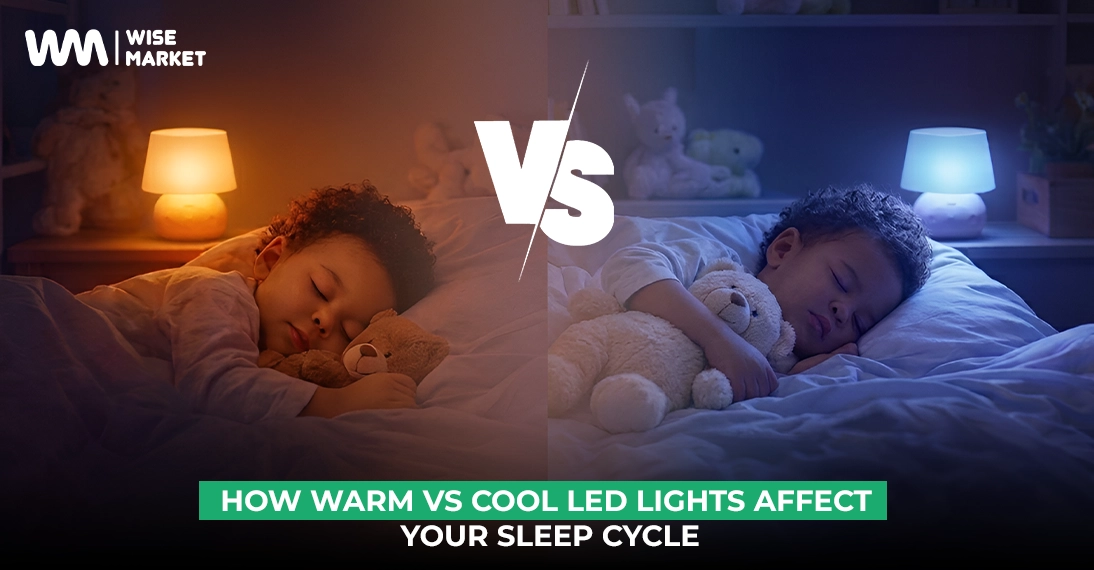

Lighting directly controls your body’s biological clock, known as the circadian rhythm, by regulating melatonin, the hormone responsible for sleepiness and night-time recovery.
- Cool LED Lights (5000K – 6500K): High in short-wavelength blue light. They suppress melatonin production, increase heart rate, elevate alertness, and keep your mind active. Excellent for morning focus, but disruptive if used 2 to 3 hours before sleep.
- Warm LED Lights (2700K – 3000K): Emit longer, warm yellow-to-amber wavelengths. They mimic natural sunset light and do not suppress melatonin, signaling to your brain that it is time to unwind and fall asleep.
The Biological Mechanism: How Your Brain Sees Light
Your eyes contain non-visual light sensors called Intrinsically Photosensitive Retinal Ganglion Cells (ipRGCs). Rather than helping you see shapes, these cells measure ambient color temperature and light intensity, sending signals straight to your brain’s master clock, the suprachiasmatic nucleus.
- When ipRGCs detect high blue light (Cool LED / Sunlight): The brain assumes it is midday. It inhibits melatonin release, triggers cortisol production, and keeps your body in high gear.
- When blue light drops (Warm LED / Firelight): The brain recognizes dusk. It shifts into recovery mode, triggering melatonin secretion, lowering core body temperature, and preparing your muscles for deep rest.
Technical Comparison: Warm, Neutral, and Cool LED Lighting
| Parameter | Warm LED Light (2700K – 3000K) | Neutral LED Light (4000K) | Cool LED Light (5000K – 6500K) |
| Visual Glow | Warm yellow to soft amber | Clean, balanced daylight white | Crisp white with blue undertones |
| Melatonin Impact | Minimal to zero suppression | Moderate balance | High melatonin suppression |
| Psychological Effect | Cozy, calming, relaxing | Alert, clear, balanced | Stimulating, energizing |
| Best Usage Time | Evening (6:00 PM onwards) | Morning to mid-afternoon | Early morning / Intense task time |
| Ideal Rooms | Bedrooms, lounges, dining spaces | Kitchens, vanity mirrors, hallways | Study desks, offices, workshops |
| Common Mistake | Using in office desks (causes fatigue) | Using everywhere without control | Installing in bedrooms (causes insomnia) |
Realities of Lighting in Pakistani Households
Most homes in Pakistan historically rely on unshaded overhead tube lights and high-wattage 6500K cool white LED bulbs in every room. While this offers high visibility, it creates specific late-night sleep challenges:
1. Late Dinners & Delayed Melatonin
In Pakistan, late dinners (9:00 PM – 10:30 PM) combined with bright overhead cool lights force your body to stay in an artificially prolonged daytime state. Even when you lie down at 11:30 PM, your brain needs another 1 to 2 hours to start producing melatonin.
2. High-Glare Direct Overhead Lighting
Unshaded ceiling fixtures direct unfiltered cool light straight into your line of sight. This flat-angle exposure maximizes ipRGC stimulation compared to indirect lamp light bounced off walls.
3. UPS and Inverter Backup Habits
During power outages, households often run a single high-wattage cool tube light per room on backup power. Relying on intense overhead cool light during late-evening load shedding keeps the brain vigilant right before bedtime.
Room-by-Room Lighting Strategy
To fix your home lighting without expensive remodeling, adopt a layered, time-sensitive strategy:
Bedrooms (Sleep-First Environment)
- Main Overhead: Use 2700K to 3000K warm LED bulbs. Switch them off completely 1 hour before bed.
- Bedside Lamps: Use low-wattage warm bulbs shaded downward so light does not hit your eyes directly.
Workspaces & Study Desks
- Daytime: Use a focused 5000K cool desk lamp to maximize alertness and focus.
- Nighttime Study: Lower the desk lamp brightness and switch to a warmer color temperature after 8:00 PM to prevent late-night restlessness.
Living & Dining Areas
- Dual-Lighting Setup: Install dual-switch lighting (cool white for daytime cleaning/activity and warm white for evening family relaxation).
Common Mistakes That Ruin Sleep Quality
- Relying Solely on Phone “Night Shift” Modes: Blue-light phone filters help, but they cannot override bright cool overhead room lights shining into your eyes.
- Studying Under High-Wattage Cool Tubelights Late at Night: High blue light keeps cortisol elevated, making it impossible to fall asleep immediately after closing your books.
- Using High-Brightness Night Lights: Even low-wattage cool white night lights can disrupt deep sleep cycles if left on in the bedroom. Opt for dim, warm red or amber night lights placed near floor level.
Integrating Smart Lighting Solutions Into Your Space
Optimizing your environment often comes down to managing transitions smoothly throughout the evening. When you want to shift your home from a high-focus zone to a restful sanctuary without manually swapping out bulbs every few hours, modern lighting technology offers practical flexibility.
For instance, incorporating Smart RGB & CCT LED Bulbs allows you to program gradual color shifts right from your phone, taking the friction out of evening routines. Similarly, setting up an Eye-Care Adjustable Desk Lamp in home offices or study areas gives late-night readers precise control over brightness and color temperature, minimizing eye strain without keeping the brain wired past bedtime.
If you prefer keeping your current lamps, pairing them with Smart Plugs & Automation Switches enables simple schedules to cut power or dim ambient levels as sleep time approaches. You can find these options easily across collections at Wise Market Pakistan when you are ready to upgrade your home setup.
Conclusion
Light is one of the most powerful external cues governing your biological clock, yet it is often the most overlooked aspect of daily health in Pakistani households. By simply swapping out harsh 6500K cool white bulbs in relaxation zones for warm 2700K alternatives, reducing overhead glare, and embracing adjustable or smart lighting habits, you can dramatically improve your sleep quality and morning energy levels. Making small, mindful adjustments to your evening illumination is a simple investment in long-term rest, focus, and overall well-being.