

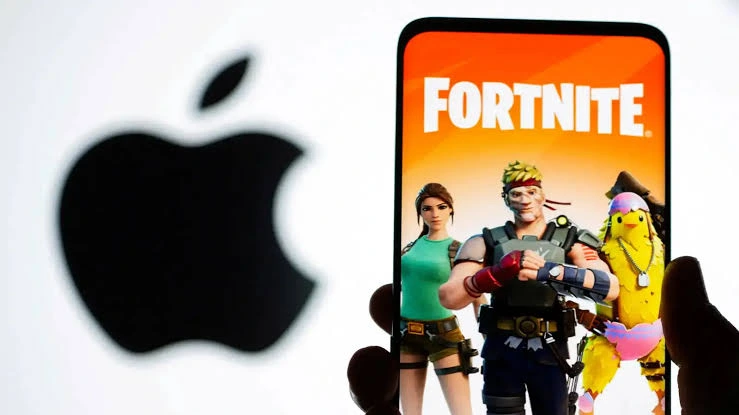

A federal judge is urging Apple to either allow Fortnite back onto the U.S. App Store or return to court to explain why it hasn’t done so.
In a recent filing, U.S. District Judge Yvonne Gonzalez Rogers acknowledged that the court has received a new motion from Epic Games, which is pushing for Apple to approve Fortnite for distribution on its platform.
The judge expressed her frustration by asking Apple to clarify the “legal authority upon which Apple contends that it can ignore this Court’s order.” She also hinted that if Apple doesn’t resolve the issue soon, they might have to come back to court to explain themselves.
“Apple is fully capable of resolving this issue without further briefing or a hearing,” she pointed out, reminding the company to identify the official responsible for ensuring they comply with the court’s ruling.
The implication of requesting the name of the Apple official in the recent filing is that Gonzalez Rogers may be entertaining the idea of contempt charges for failing to adhere to the court’s injunction.
This comes on the heels of her previous ruling, in which the judge clearly criticized Apple for trying to circumvent or route the court directives and charged the tech giant with perjury.
Following their victory in allowing external payment links to be included in their app, Epic Games resubmitted Fortnite for approval on the U.S. App Store. However, Apple informed the company that they would not make a decision on the submission until the Ninth Circuit makes a ruling on their request for a partial stay of the new injunction. In simpler terms, Apple stated that they were not obligated to approve the app until the legal proceedings of their appeal were completed.
On Friday, Epic Games took legal action to urge the court to enforce an injunction following Apple’s recent decision.
This latest move comes after a lengthy legal battle over Apple’s App Store policies, which have traditionally restricted app developers from linking to outside payment methods without paying Apple a commission. Initially, Apple responded to the court’s ruling by allowing U.S. developers to seek exceptions to its App Store guidelines. However, it still charged a 27% commission on these alternative purchases, reduced from the standard 30%. Additionally, Apple mandated that developers display “scare screens” to warn users when they were about to make purchases outside of the App Store.
In a significant win for developers, Judge Gonzalez Rogers found that Apple was in “willful violation” of the court’s injunction regarding unfair pricing and commissions, which seemingly opened the door for Fortnite to return to the App Store. However, instead of making a decision right away, Apple delayed for a week, neither approving nor rejecting the game’s publication while its legal team prepared a response.
What happens next could be important for Apple, as it might lead to similar legal actions or regulations in other parts of the world.
In the initial antitrust lawsuit brought by Epic Games, Apple came out on top when the court ruled that it wasn’t a monopoly. However, Epic did achieve a small victory: the judge, Gonzalez Rogers, decided that iPhone users should be allowed to choose alternative payment methods if developers want to use their own websites for in-app purchases, such as those for virtual items or subscriptions.
After this ruling, Apple changed its App Store rules in the U.S. As a result, apps like Spotify, Amazon Kindle, and Patreon quickly updated their apps to make use of this new option.
Epic Games chose not to comment on the situation, and Apple has not replied to requests for a statement.