


TL;DR
- Standard labels like Age 5-6 are unreliable because every child grows at a different rate.
- Use a soft, flexible measuring tape to capture exact inches rather than guessing based on height.
- Always keep one finger inside the tape when measuring the chest to ensure your child can move and breathe easily.
- If your child won’t stand still, lay their best-fitting clothes on a bed and measure the garment instead.
- We provide a 14-day money-back guarantee so you can shop for kids’ fashion with a total safety net if the fit isn’t perfect.
You finally find that perfect velvet sherwani or a glittery mesh frock online for your little one. You wait three days for the courier, tear the bag open, and realize the sleeves wouldn’t even fit a doll. It is a frustrating cycle that leaves Pakistani parents dreading the checkout button because age labels in our market are about as predictable as the weather in Murree.
Buying a size 4-5 for a four-year-old is a gamble that rarely pays off. One brand’s medium is another brand’s extra-small, and your child’s growth spurt doesn’t care about a factory’s standard pattern. We want to end the expectation vs. reality headache that clutters your cupboards with clothes that are either too tight or too baggy.
Let’s get down to the brass tacks of measuring so you can shop for kids’ fashion with total precision. You are about to become a pro at navigating size charts like a seasoned tailor.
Why Are Age Labels the Most Unreliable Way to Shop for Kids’ Fashion?
Standard age tags are based on an average child that doesn’t actually exist in the real world. Some kids are tall and lean, while others are sturdy and short, yet shops put them all into the same 6-year-old bracket. If you rely on these numbers, you are basically flipping a coin with your hard-earned money.
Actually, the manufacturing process in Pakistan often sees variations depending on the fabric used. A cotton kurta won’t stretch, while a jersey t-shirt will, yet they often carry the same size tag. This discrepancy is why your laundry basket has five different brands that all fit differently.
We see this struggle daily at Wise Market Pakistan, where parents ask us which size is true to fit. Our advice is always the same: ignore the birthday on the tag and trust the inches on the tape. It is the only way to ensure your kid looks sharp for the next family dholak.
What Essential Tools Do You Need for a Precise Measurement?
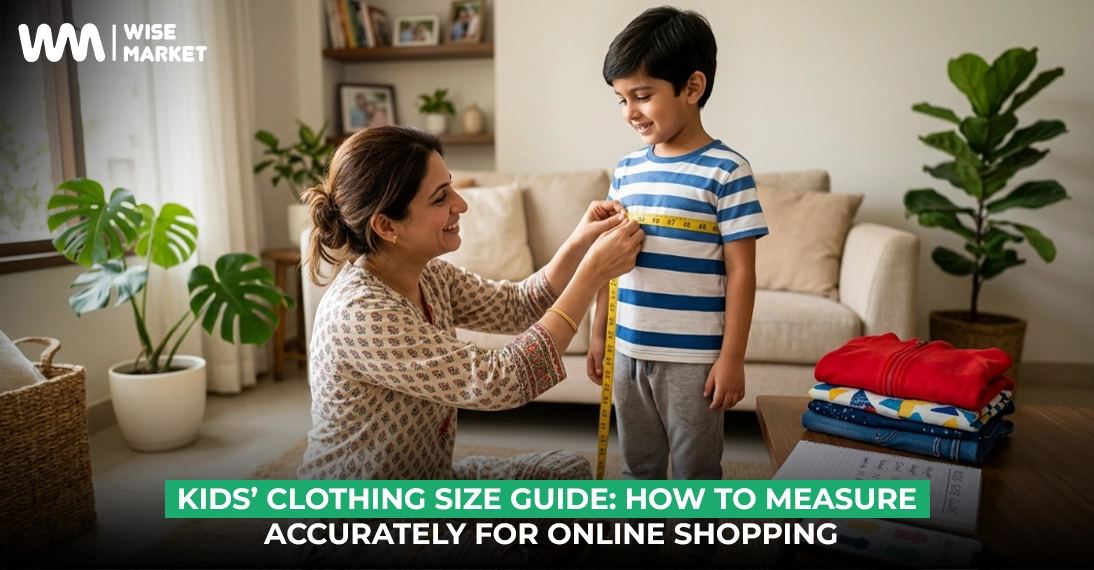
You don’t need a professional workshop to get this right, but you do need more than just a piece of string and a ruler. A soft, flexible measuring tape is the gold standard because it curves around the body without pinching. If you don’t have one, use a long ribbon and then measure that ribbon against a flat scale.
- A Flexible Tape: Essential for chests and waists.
- A Flat Surface: Use the floor or a table to measure existing clothes.
- A Notepad: Write down the date and the numbers; kids grow fast.
- A Fidget Distraction: A lollipop or a cartoon helps keep them still.
How Do You Measure a Squirmy Toddler Without Losing Your Sanity?
This is where the real challenge begins because most children see a measuring tape and think it is a toy for a game of tag. The secret is to make it a game or measure them while they are standing against a wall. If they won’t stand still, wait until they are engrossed in a snack or a book.
The Chest Check
Wrap the tape around the fullest part of the chest, usually right under the armpits. Make sure the tape is level across the back and keep one finger inside the tape. This one-finger rule ensures the clothing won’t be too tight when they are running around the wedding hall.
Finding the Length
For shirts, measure from the highest point of the shoulder down to where you want the hem to sit. For trousers or ghararas, measure from the waist down to the ankle bone. If you want the outfit to last more than a month, add an extra inch to these numbers for a bit of growth insurance.
The Waistline Secret
Measure the natural waistline, which is the narrowest part of the torso. For kids’ fashion bottoms, always check if the waistband is elasticated or has adjustable buttons. In our experience, elastic waists are a lifesaver for the festive season when kids are eating plenty of wedding cake and biryani.
Why Is a Sizing Table Better Than Guessing?
Most reputable websites provide a chart, but comparing your child’s body to the garment’s measurements can be confusing. Use this table as a general reference for how a Standard fit should look in inches for the 2026 season.
| Body Part | Toddler (Size 2-3) | Young Child (Size 5-6) | Older Kid (Size 9-10) | Human Pro Tip |
| Chest | 21 – 22 inches | 24 – 25 inches | 28 – 29 inches | Always round up to the next inch. |
| Waist | 20 – 21 inches | 22 – 23 inches | 24 – 25 inches | Measure over their usual undies. |
| Height | 35 – 38 inches | 44 – 47 inches | 52 – 55 inches | Mark their height on a door frame! |
How Can You Account for Future Growth Spurts?
Children in Pakistan seem to grow two inches the moment you turn your back on them. If you are buying an expensive outfit for an event that is three months away, never buy it in its current size. Actually, the smartest move is to buy one size larger and have a local tailor put in a few temporary hidden stitches.
This size-up strategy is especially important for non-stretch fabrics like silk, raw silk, and organza. These materials offer zero give, so if the child grows even a tiny bit, the seams might pop. We always encourage our community to think about the longevity of their purchases rather than just the immediate fit.
Wait, there is more: check the hem of the trousers to see if there is extra fabric tucked inside. Premium kids’ fashion brands often leave a two-inch margin so you can let the trousers down as the child gets taller. It is a small detail that doubles the life of a festive suit.
How Can You Use Existing Clothes to Get a Perfect Match?
If your child absolutely refuses to be measured, there is a brilliant cheat code you can use. Go to their cupboard and find their favourite, best-fitting shirt and a pair of trousers. Lay them flat on the bed and use your tape to measure the garment itself rather than the child.
Compare these flat lay measurements to the size guide on the website you are browsing. This method is often more accurate because it accounts for the ease or extra space needed for comfort. It removes the guesswork and ensures the new parcel will feel just as comfy as their old favourites.
We understand that parent life is 90% chaos and 10% trying to find a matching sock. Our goal at Wise Market Pakistan is to make the other parts of your life, like shopping, as smooth as silk. We verify the quality of every lifestyle item we stock because we know you don’t have time for returns and refunds.
Why Should You Join the Wise Market Community for Your Shopping?
We know that you are tired of the hit or miss nature of the Pakistani digital market. That is why we have built a space where honesty is the only policy and quality is a guarantee. We don’t just sell products; we provide a secure bridge between you and the best tech and lifestyle gear available today.
Our 14-day money-back guarantee is our way of standing by you if a size just doesn’t work out as planned. We also provide free nationwide delivery to make sure your family’s upgrades reach you, whether you are in a bustling city or a quiet town. We are here to help you build a lifestyle that is both modern and manageable.
Our team hand-picks and checks every single item before it gets anywhere near your doorstep. We want you to feel that same new phone excitement every time you unbox something from us. Visit wisemarket.com.pk today and discover how easy it is to get your family sorted with the excellence you deserve.
Frequently Asked Questions
Is it better to measure in centimetres or inches?
In Pakistan, most local brands use inches, while international brands often use centimetres. We suggest taking measurements in both and keeping a small note on your phone. This way, you are prepared regardless of which brand’s website you are visiting.
What if my child is between two different sizes?
Actually, you should always go for the larger size. It is much easier to tuck in a bit of fabric or use a belt than it is to try to squeeze a child into a tight outfit. Plus, a slightly loose fit allows for better airflow in our hot climate.
Does the fabric type change the size I should buy?
Yes, absolutely. Knitted fabrics like jersey or interlock have a natural stretch, so you can stick closer to the actual measurements. Woven fabrics like lawn, denim, or silk have no stretch, so you need to ensure there is at least an inch or two of extra space for movement.
Choosing the right size is a smart move for your budget and your child’s happiness. Your little ones deserve to look their best without feeling restricted by their clothes. Keep reading our blogs to stay updated on the latest tech, fashion, and lifestyle trends in Pakistan.